
Most of the confusion about body contouring comes from one mix-up, and it costs people money. Body contouring and weight loss are two different problems with two different solutions. Treating them as the same thing is expensive. People pay for a treatment that changes how one area looks when what they needed was help with their weight.
The difference is simple. Weight loss lowers how much fat your body carries overall. Contouring works on how one specific area looks in a person whose weight is already steady. ChiroMed offers non-surgical body contouring with Ultraslim for the second problem. If you describe the first at your consultation, we will tell you.
Dr. Justin Bergin, DC built the practice around finding the root cause rather than selling treatments. Here is what contouring is, what it is not, who tends to be a candidate, and what a first visit involves. You will not find percentages or before-and-after photographs.
What Is Body Contouring, Exactly?
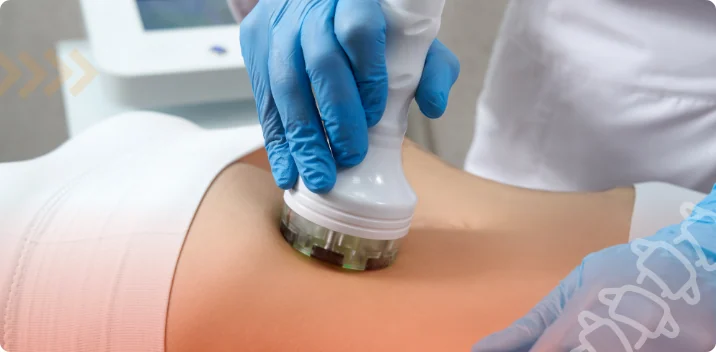
Body contouring is a group of non-surgical treatments that change how one area of the body looks without removing any tissue. There is no incision, no anesthesia and no surgical recovery. At ChiroMed it is delivered with the Ultraslim system. An assessment comes first, and it decides whether you are a candidate at all.
The FDA regulates equipment like this as aesthetic devices with defined intended uses. That matters. It is what separates a medical device run by trained staff from the consumer gadgets sold with the same vocabulary.
All of these treatments share one limit. They act on the area being treated. They do nothing to your metabolism, your appetite, your blood sugar or your overall body composition.
Is Body Contouring a Weight Loss Treatment?
No. Non-surgical body contouring is not a weight loss treatment. It does not treat obesity, and it does not replace medical care for either. The FDA says so directly in its consumer guidance: non-invasive body contouring does not treat obesity and will not result in weight loss.
We repeat that sentence to patients most weeks, because the marketing in this category has muddied it. If your goal is a lower number on the scale, more energy, better blood sugar or lower heart risk, contouring is the wrong tool. Buying it will not move you toward that goal.
Those goals belong to a different conversation. Body weight is managed through food, activity, sleep and, where it is appropriate, medical supervision. That is the territory covered by our metabolic health and weight loss programs. NIDDK guidance on treating adult overweight and obesity sets out the same order. Johns Hopkins on sustainable weight management reaches it from the practical side.
Which Areas Tend to Respond
Contouring is a local treatment. So the question is always about one region, not about your whole body.
The areas people ask about most are the abdomen, the flanks, the outer and inner thigh, the upper arm and under the chin. They have one thing in common. The rest of the body responded to consistent effort and this one area did not change with it.
That is real, and it is not a failure of willpower. Where your body stores fat is influenced by genetics, age, hormones and previous weight changes. None of those are things you chose. You can be at a steady, healthy weight, train regularly, eat well, and still have one area that sits differently.
What contouring cannot promise is that your particular area is one of the ones that responds. That is what the assessment is for.
Who Is a Good Candidate for Non-Surgical Fat Reduction?
Good candidates are at or near a steady weight. They have one specific area in mind rather than a general unhappiness with how they look. They also understand that the treatment changes appearance rather than health. Poor candidates are using contouring in place of weight management, or expect a result only surgery could produce.
Two more things get checked. The first is expectations. The FDA says plainly that results vary from person to person. It also says a treatment may not achieve the effect you want, and that any change may be temporary. If nobody has told you those three things before you book, you have not had a real consultation.
The second is your health history. Certain conditions, medications, implanted devices and pregnancy change what is appropriate. A clinic that does not ask is not screening you. Dr. Bergin treats this as a clinical decision, which sometimes means telling someone that contouring is not their answer.
What Happens at a Contouring Consultation
The first visit is an assessment and a conversation. Nobody is booking you for a treatment before that.
We take a health history. We ask what you have already tried and for how long. We look at the area you want treated, and we talk through what is realistic for someone with your history. If what you describe points toward weight management rather than appearance, we will tell you and point you to the right service instead.
If contouring is appropriate, what a contouring consultation covers includes how the Ultraslim system is used and how many visits a plan would involve. You also hear what a session feels like and what we would count as a meaningful change. The payment picture comes at that same visit, not at the end of one.
Contouring at ChiroMed is cash pay. Payment plans are available for self-pay care, and the front desk will tell you exactly what applies before you commit to anything. The only published figure at the practice is the new patient visit: Consultation, Exam, X-Rays (If Needed) & Report of Findings: Only $47.
What Results Should You Expect?
Expect a change in how the treated area looks. It develops gradually rather than appearing at once, and it varies from person to person. It also sits on top of whatever you do with your weight and your habits afterward. Expect no change in your weight, your lab results or your overall health.
We do not publish figures for this service. Percentages, inch counts and paired photographs are the standard sales material in this category. Almost none of them are produced under conditions that let you apply them to yourself. So we leave them out.
What you can hold us to is the process. You will be told whether you are a candidate, what a plan involves, and what to watch for. You will also be told what we would count as the treatment not working.
Where to Begin
If one area has resisted years of consistent effort, answer one question first. Which problem are you actually trying to solve? Shape and weight look similar from the outside. They respond to completely different things, and getting that wrong is the most expensive mistake in this category.
An honest assessment sorts it out quickly. Bring your history, your goals and your questions. Expect to be told plainly if contouring is not the right tool for what you described. If it is the right tool, you will know what a plan looks like before you agree to anything.
Book the $47 new patient visit at the Lakeland office. Ask us to assess whether the Ultraslim contouring service fits the outcome you have in mind.
Ready to take the next step?
Talk with the ChiroMed team about a body contouring plan built around what your examination actually finds.